It All Starts at IC: From a Walk in Central Park to the Future of Social Media
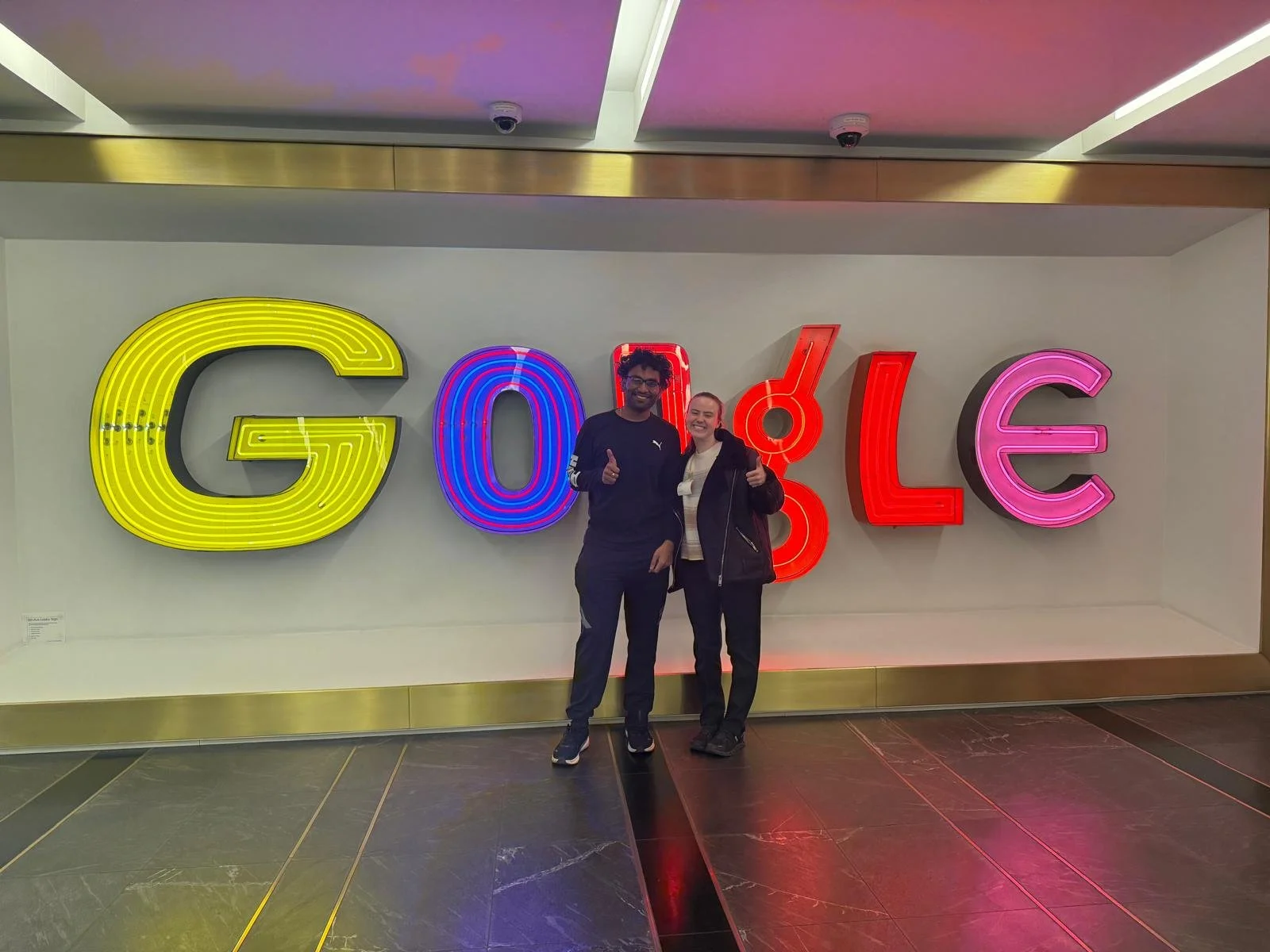
Sophia Green and Ayen Monasha didn't plan to start a company together when they met briefly at Business Today's 50th International Conference in November 2024. The unlikely duo of a biochemistry student from Toronto attending her first conference, and the other, a founder, in the middle of exiting his first startup. They exchanged a conversation, connected on LinkedIn, and went their separate ways.
Read More
Finding Your Why: A Talk with Sara McCabe
Many people go days, weeks, years, even decades without finding their purpose or motivation to pursue their endeavors. Sara McCabe, Chief Executive Officer of Wayside Youth, illustrates how to find your “why” through her experiences in the human and social services industry.
Read More
Forging Leadership and Metal Alloys: How Devon Winter’s Philosophy Shapes Her Career
The metals industry is defined by supply chains, fluctuating geopolitics, and predominantly male leadership. Yet, Devon Winters, CEO of New Jersey-based FW Winter Inc. & Co, runs her family-owned business with expert leadership, specializing in processing metal powders for a wide range of industries.
Read More
Neil Buethe’s Story: Life in Sports Management
In 2026, the United States will host the largest sporting event ever staged. Neil Buethe is one of the people making sure it goes off without a hitch. As Advisor to the CEO of the U.S. Soccer Federation–the nonprofit governing body that oversees American soccer at every level, from youth leagues to the national teams–Buethe has spent over two decades at the center of the sport’s growth. He came to Business Today’s 51st International Conference to share what that journey has looked like, and what he wishes he’d known at the start of it.
Read More
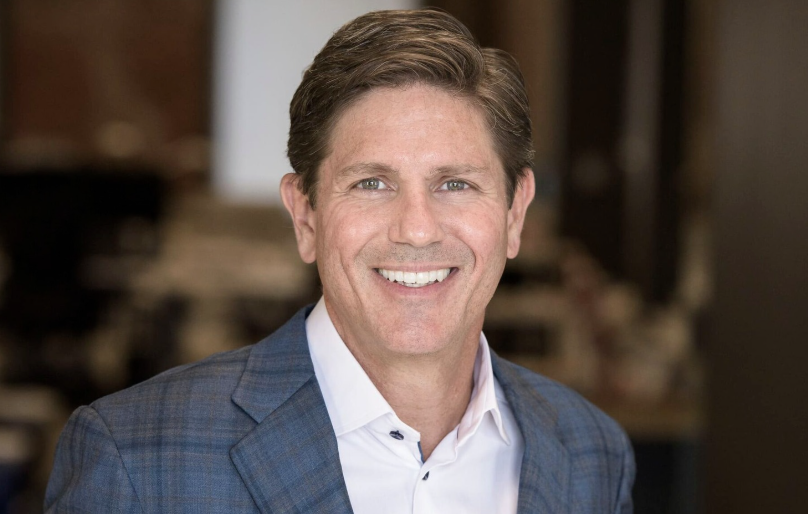
A Talk with David Hart Leading by Design, Relationships, and Opportunity
As President and CEO of Steinberg Hart, David Hart leads with intention, thoughtfully prioritizing his time and reinforcing the idea that every decision truly matters. When asked about his daily responsibilities, he distinguishes between what he does and what he should do. His main focus is staying connected to the true meaning of leadership, mainly, making “sure that we’re always looking ahead, as fundamentally, our job is to invent the future.”
Read More
Do More with the Same: How Zeitview's CTO is Rethinking AI Adoption
“Do you want to do the same amount with fewer people, or do you want to do more with the same number of people?” This is the question that Zeitview Chief Technology Officer Matthew Falk poses to his executive team in stark contrast to the tech industry’s rush to replace workers with AI. Falk believes that AI should amplify human potential rather than replace it.
Read More
Framing Ideas, Building Impact: Alec Konstantin on Leadership and Justice
Alec Konstantin, Chief Operating Officer at Sanford Heisler Sharp McKnight, spoke at Business Today’s 51st International Conference about law and leadership. He emphasized a key point: “People won’t see the picture until you put it in the right frame.” For him, framing is essential, not just decorative, as it enables action on complex ideas and commitments.
Read More
Chad Altbaier: Leading on the Unconventional
The typical corporation consists of several employees, managers, directors, the C-level executives, investors, and, most importantly, the primary CEO. But not at Standard Fiber. Chad Altbaier, co-CEO of Standard Fiber, emphasizes the uniqueness of being an industry leader unconventionally. Drawing on years of experience in the textile industry, from his time at a family business through his jump to Standard Fiber, Altbaier reflects on his role as co-CEO and how that has shaped him into the leader he is today.
Read More
The Long Game: Mark Sabbagh on Being a Lifelong Learner
Mark Sabbagh doesn't wait. As founder, investor, and CEO leading the trading and appliance group at Diamond Trading Group, and most recently advising Bazzar.ai on resale strategy, his career is built on moving fast in markets that won't hold still. At Business Today's 51st International Conference, he talked students through what that actually looks like: the gut calls, the pressure, the loneliness, and the long view that holds it all together.
Read More
A Talk with Courtney Harrison: Uniquely Human
Courtney Harrison, founder of Medius Advisory Group, has led hundreds of successful organizations, including Fortune 500 companies like Nike, Microsoft, and American Express, as well as startups such as Tesla and Asurion. Among her 25 years of consulting, her most memorable role was Chief of Human Resources & Event Services at the United States Olympic Committee in 2008.
Read More
Stan Rubin: Recognizing Humanity in the Face of Adversit
Stan Rubin is no stranger to risks, especially as he approaches his 50th year in the finance industry. Taking them, managing them, overcoming them; Rubin has done it all. His professional journey began in 1977 at PricewaterhouseCoopers, before he took on his first big role as Chief Financial Officer at American Express's Singapore-based Japan/Asia Pacific/Australia Region in 2001.
Read More
Learning from the Past to Pave the Future: Karla Johnson
Karla Johnson, CEO of Pennsylvania Leadership Charter School, shares her journey to this position and the important skills she’s developed through her experiences.
Read More
Beyond the Hedge Fund: Prospero.ai's CEO Unveils a People-First Vision for AI Finance
He sees AI not as a replacement for human intuition but as a tool to enhance decision-making and create financial opportunities that were previously inaccessible to everyday investors. “The future of AI is about empowering people,” he said. By focusing on transparency, fostering innovation within his team, and designing products that genuinely address consumer needs, Kailas is positioning Prospero.ai as a leader in ethical and transformative financial solutions.
Read More
Cindy Fields: Finding Community and Courage on the Road from Wall Street to 'Fairy Godmother'
Equally important is staying true to yourself. “Don’t be afraid of being different,” she says. She recalled how she embodied this ethos when she balanced her demanding career as a Wall Street banker with her passion for ballroom dancing. “I was a straight-laced banker by day and a ballroom dancer by night.”
Read More
Knopman Marks’ Donald Parker: Driving Record Pass Rates by Putting Comprehension—and Equity—First
Parker continuously emphasizes that memorization is not a substitute for comprehension. Success in professional exams requires more than rote memorization. “The questions on exams today aren’t just about recall,” he notes. “You really have to understand the content to apply it.” To ensure students understand, Parker employs real-world examples to make complex financial concepts relatable.
Read More
"It Will Never Let You Down": Alana Francis de Govia on Staying True to Your Values in Work and Leadership
In particular, integrity is a moral that became vital to her as she made decisions in her leadership role. “When you’re in a leadership role,” Govia said, “you sometimes have to make tough decisions that people won’t like and sometimes you have to execute decisions that you won’t necessarily agree with.” Amongst the challenges that come with her role, integrity has helped her stay grounded.
Read More
Authentic Leadership, Community Impact, and the Future of Finance: A Conversation with Jerry Reed
Reed’s advocacy for education stems from his recognition of its transformative power. “If I could go back to my younger self, I’d emphasize the importance of understanding what it takes to live the life you want,” he said. His advice to students is simple but profound: combine a strong grounding in technology with a clear sense of purpose, and you’ll be prepared to navigate the challenges of the modern world.
Read More
Theodore Adams III: Excellence, Empowerment, and the Metrics of a Successful Business
Ted also discussed the importance of recruiting and hiring hardworking and loyal staff: “I get some really, really great people.” He emphasized the importance of learning to cooperate effectively with others, mentioning that students will forget about their statistics classes but will remember the classes that give insight into working with people. He no longer works with people who bring down the energy of the room, and highlighted that he makes decisions constantly about whether a problem brought to him should be listened to, empathized with, or dismissed, because time is an asset and a nonrenewable resource.
Read More
Brian Marks: Building Relationships, Compounding Success, and Mastering Crucial Conversations
When it comes to networking, he encourages students to take small, consistent steps—such as meeting one finance professional each month during college—to accumulate a valuable network of contacts before even starting one’s professional journey. Marks emphasizes the power of incremental growth in skills and knowledge, stating, “If you are compounding your learning, you’re learning a little bit about something every day, [even if it’s] just a 1% change. It’s those 1% gains every day that you look back over 20 years. You’re thinking, ‘I’m really happy that I started doing that 20 years ago.’” His advice reinforces the idea that long-term success is the result of intentional and steady effort rather than overnight breakthroughs.
Read More
The Bridge, Not the Barrier: WorkJam CMO Louise Clements on Scaling a Global Brand and Prioritizing Human Connection
As WorkJam scaled from a startup into a global enterprise, one of Clements’ priorities was to establish core values collaboratively with employees. “Your brand is your most valuable asset besides your product,” she emphasized. These values are not just words but principles that guide decision-making. WorkJam’s team evaluates their campaigns against these values, ensuring that every email, project, and message aligns with the company’s mission.
Read More