
Do More with the Same: How Zeitview's CTO is Rethinking AI Adoption
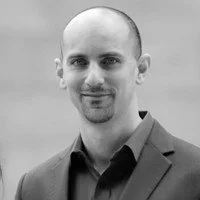
Zeitview Chief Technology Officer Matthew Falk
“Do you want to do the same amount with fewer people, or do you want to do more with the same number of people?” This is the question that Zeitview Chief Technology Officer Matthew Falk poses to his executive team in stark contrast to the tech industry’s rush to replace workers with AI. Falk believes that AI should amplify human potential rather than replace it.
At the 51st International Conference, Falk shared his optimistic views of AI to a room full of college students from around the world; an optimistic evaluation in the face of bleak job-market projections.
Falk emphasized that he is equally proud of both Zeitview’s competitiveness and employee longevity. As a global leader in advanced aerial inspection and data analytics for renewable energy assets and critical infrastructure, Falk acknowledges that it's “part of my job as a CTO to make sure that I’m growing my team and making sure that I’m encouraging and training them to utilize these new tools and skills so that they become productive.” In that vein, he believes that failing “to adopt these tools” will make the company “obsolete.”
This philosophy extends beyond Zeitview’s walls. Falk is invested in ensuring his engineers remain competitive long after they leave. “Long after they’ve left Zeitview, or they’re at another company, they’re still able to get those new jobs, be productive, and be very highly contributing members, because we made sure that they grew while they were here,” he said.
Falk explained how this stance has shifted the company’s hiring processes. Although the traditional coding challenges remain, the emphasis is no longer on the code itself. “I don’t care how good your solution is, I care about how many different ways you can solve it,” Falk said, emphasizing how he is screening candidates for the ability to think creatively, pivot when constraints appear, and effectively direct AI tools.
Looking ahead, Falk envisions a workforce in which engineers function as hybrid product managers and software engineers, orchestrating AI rather than competing with it. This vision is surprisingly pragmatic in its challenge to conventional wisdom. “If you’re able to replace them with AI and you didn’t think they were good, why did you have them in the first place? If they’re good and they’re on your team, be invested in them, right?” he commented.
Overall, Falk’s outlook on AI is that it is a valuable tool capable of taking his team to the next level, rather than just a cost-cutting measure. In response to his core question, Falk always prefers to do more with the same number of people. He believes this choice will allow Zeitview to really “go and beat the competition and kind of accelerate the innovation of the company.”
Falk’s message to students was direct: “Take more AI classes” and develop hybrid skills that extend beyond pure coding. As software engineering evolves, professionals must become “hybrid product managers” capable of conceptualizing solutions and directing AI to build them. It’s a shift from writing code to orchestrating intelligence.
Falk’s vision is not just optimistic, it’s strategic. Companies that choose elimination may see short-term gains, but those that choose elevation will define the future. For Zeitview, the answer has always been clear: invest in people, empower them with AI, and watch them build what competitors thought impossible.