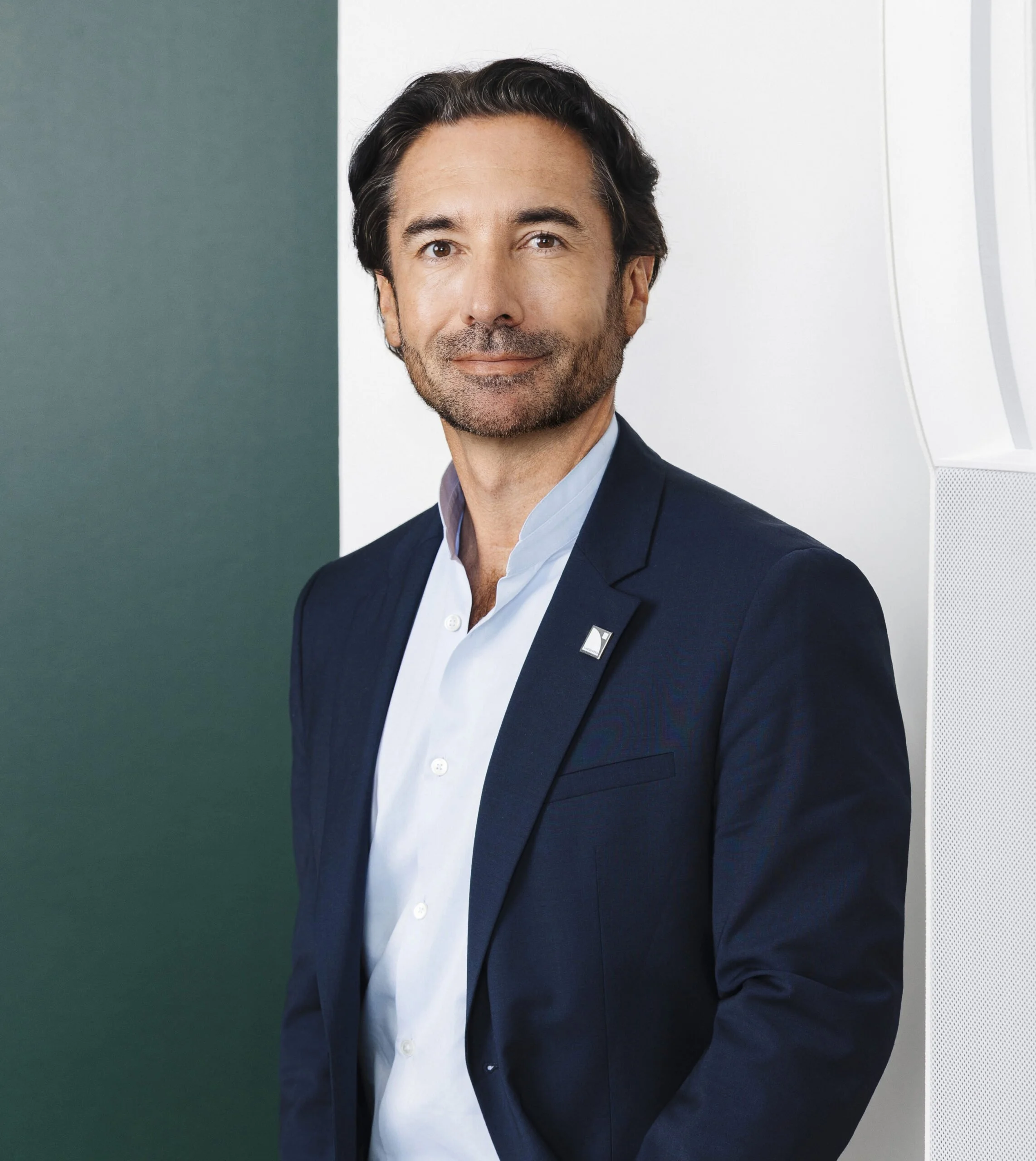
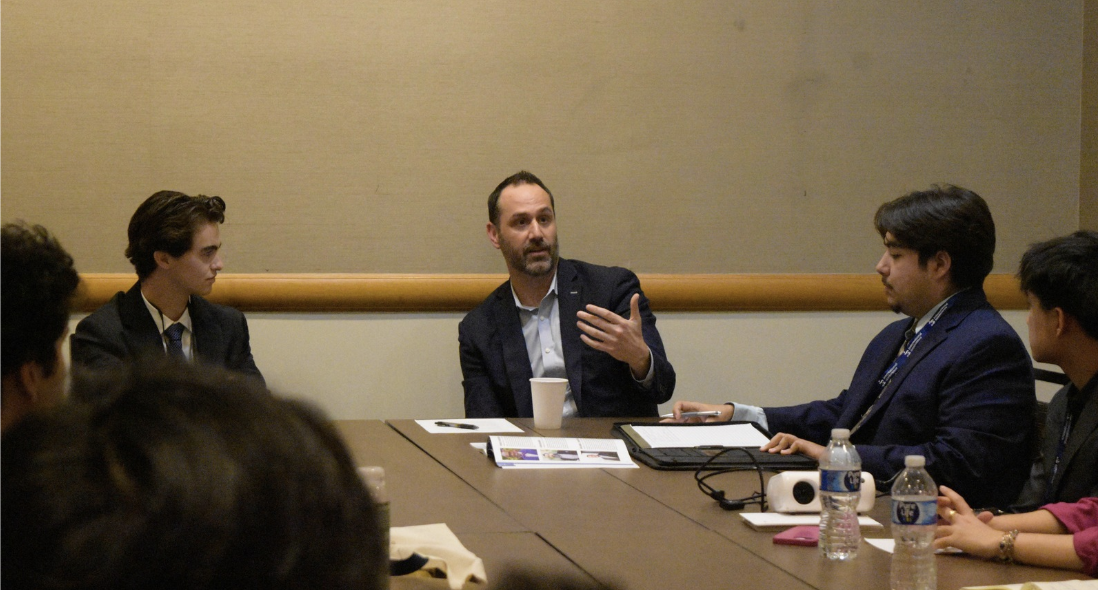
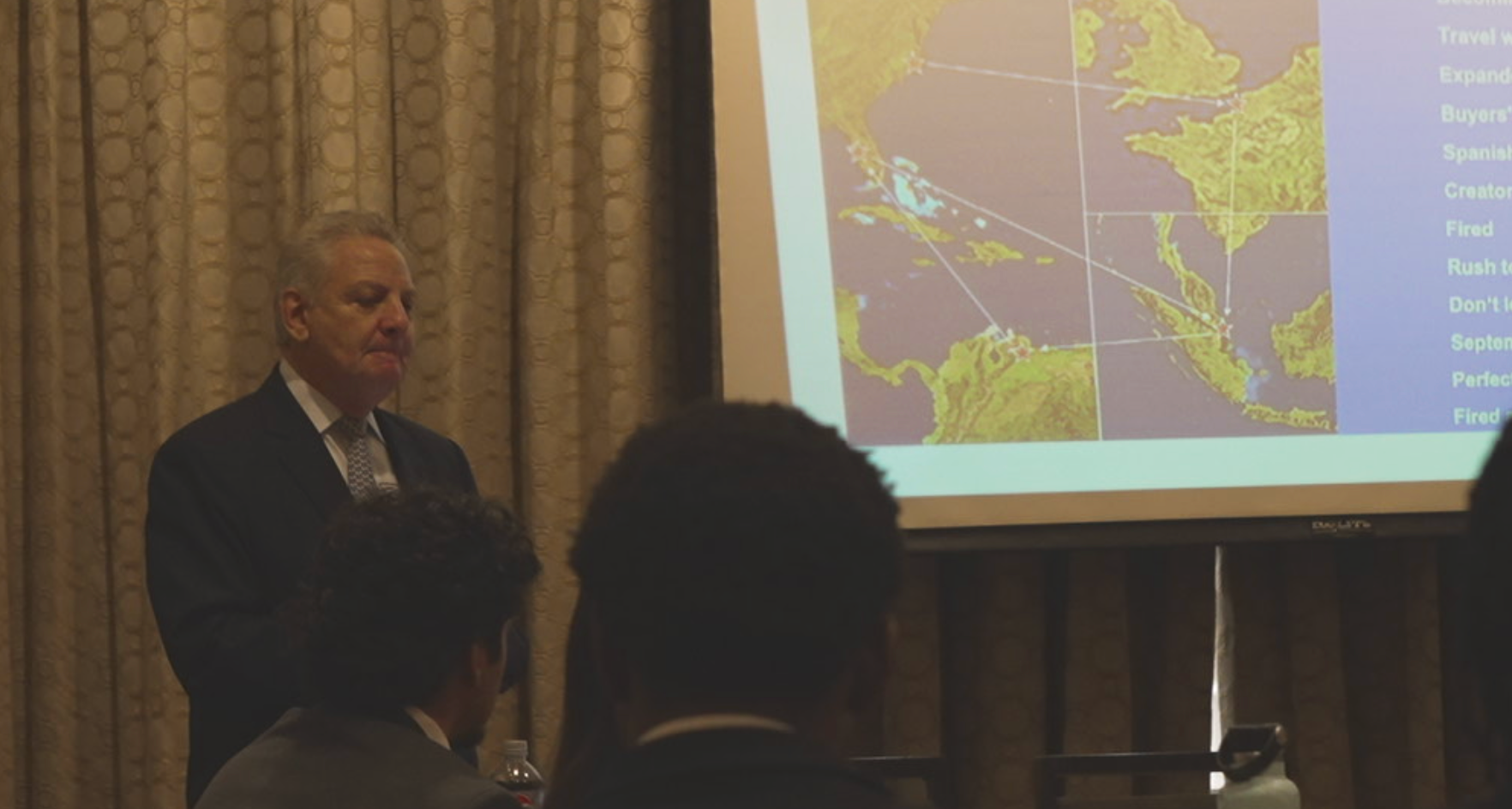
The Preservation of Human Experience Through Sound: An Interview With Laurent Vaissie
Lights, sound, and action.
These three words are ubiquitous in any performance, driving industries like theater, movies, and music that aim to immerse audiences in a whole different world. L-Acoustics, a premier French audio manufacturer, helps complete that world by providing sound for countless clients and events across those industries.
Read More
It All Starts at IC: From a Walk in Central Park to the Future of Social Media
Sophia Green and Ayen Monasha didn't plan to start a company together when they met briefly at Business Today's 50th International Conference in November 2024. The unlikely duo of a biochemistry student from Toronto attending her first conference, and the other, a founder, in the middle of exiting his first startup. They exchanged a conversation, connected on LinkedIn, and went their separate ways.
Read More
Finding Your Why: A Talk with Sara McCabe
Many people go days, weeks, years, even decades without finding their purpose or motivation to pursue their endeavors. Sara McCabe, Chief Executive Officer of Wayside Youth, illustrates how to find your “why” through her experiences in the human and social services industry.
Read More
Forging Leadership and Metal Alloys: How Devon Winter’s Philosophy Shapes Her Career
The metals industry is defined by supply chains, fluctuating geopolitics, and predominantly male leadership. Yet, Devon Winters, CEO of New Jersey-based FW Winter Inc. & Co, runs her family-owned business with expert leadership, specializing in processing metal powders for a wide range of industries.
Read More
Neil Buethe’s Story: Life in Sports Management
In 2026, the United States will host the largest sporting event ever staged. Neil Buethe is one of the people making sure it goes off without a hitch. As Advisor to the CEO of the U.S. Soccer Federation–the nonprofit governing body that oversees American soccer at every level, from youth leagues to the national teams–Buethe has spent over two decades at the center of the sport’s growth. He came to Business Today’s 51st International Conference to share what that journey has looked like, and what he wishes he’d known at the start of it.
Read More
A Talk with David Hart Leading by Design, Relationships, and Opportunity
As President and CEO of Steinberg Hart, David Hart leads with intention, thoughtfully prioritizing his time and reinforcing the idea that every decision truly matters. When asked about his daily responsibilities, he distinguishes between what he does and what he should do. His main focus is staying connected to the true meaning of leadership, mainly, making “sure that we’re always looking ahead, as fundamentally, our job is to invent the future.”
Read More
Do More with the Same: How Zeitview's CTO is Rethinking AI Adoption
“Do you want to do the same amount with fewer people, or do you want to do more with the same number of people?” This is the question that Zeitview Chief Technology Officer Matthew Falk poses to his executive team in stark contrast to the tech industry’s rush to replace workers with AI. Falk believes that AI should amplify human potential rather than replace it.
Read More
Framing Ideas, Building Impact: Alec Konstantin on Leadership and Justice
Alec Konstantin, Chief Operating Officer at Sanford Heisler Sharp McKnight, spoke at Business Today’s 51st International Conference about law and leadership. He emphasized a key point: “People won’t see the picture until you put it in the right frame.” For him, framing is essential, not just decorative, as it enables action on complex ideas and commitments.
Read More
Chad Altbaier: Leading on the Unconventional
The typical corporation consists of several employees, managers, directors, the C-level executives, investors, and, most importantly, the primary CEO. But not at Standard Fiber. Chad Altbaier, co-CEO of Standard Fiber, emphasizes the uniqueness of being an industry leader unconventionally. Drawing on years of experience in the textile industry, from his time at a family business through his jump to Standard Fiber, Altbaier reflects on his role as co-CEO and how that has shaped him into the leader he is today.
Read More
The Long Game: Mark Sabbagh on Being a Lifelong Learner
Mark Sabbagh doesn't wait. As founder, investor, and CEO leading the trading and appliance group at Diamond Trading Group, and most recently advising Bazzar.ai on resale strategy, his career is built on moving fast in markets that won't hold still. At Business Today's 51st International Conference, he talked students through what that actually looks like: the gut calls, the pressure, the loneliness, and the long view that holds it all together.
Read More
General Counsel at Olaplex Visits Princeton
Former secretary of Tiffany & Co. and current General Counsel of prestige hair care brand Olaplex, John Duffy, visited his alma mater on April 2nd. His presentation to Princeton students ranged from a discussion of the pressures of working for an up-and-coming company, the importance of rebranding, and how to take advantage of opportunities at Princeton.
Read More
A Talk with Courtney Harrison: Uniquely Human
Courtney Harrison, founder of Medius Advisory Group, has led hundreds of successful organizations, including Fortune 500 companies like Nike, Microsoft, and American Express, as well as startups such as Tesla and Asurion. Among her 25 years of consulting, her most memorable role was Chief of Human Resources & Event Services at the United States Olympic Committee in 2008.
Read More
Stan Rubin: Recognizing Humanity in the Face of Adversit
Stan Rubin is no stranger to risks, especially as he approaches his 50th year in the finance industry. Taking them, managing them, overcoming them; Rubin has done it all. His professional journey began in 1977 at PricewaterhouseCoopers, before he took on his first big role as Chief Financial Officer at American Express's Singapore-based Japan/Asia Pacific/Australia Region in 2001.
Read More
Learning from the Past to Pave the Future: Karla Johnson
Karla Johnson, CEO of Pennsylvania Leadership Charter School, shares her journey to this position and the important skills she’s developed through her experiences.
Read More
The College Kids Who Are Branding Tomorrow's Startups
Wu traced the origins of flow.studio back to when he was thirteen, hoping to make extra money during the summer. Because he was too young for a job, he started looking for opportunities online with his friend Michael Roberson, a student at Columbia. At the time, Wu was known for his hyperrealistic colored pencil illustrations. Michael discovered logo design on Reddit and convinced Wu to join him. Their first paid jobs were fifty-dollar projects. “I still remember the first time we got a three-hundred-dollar project. It was the best day of my life.”
Read More
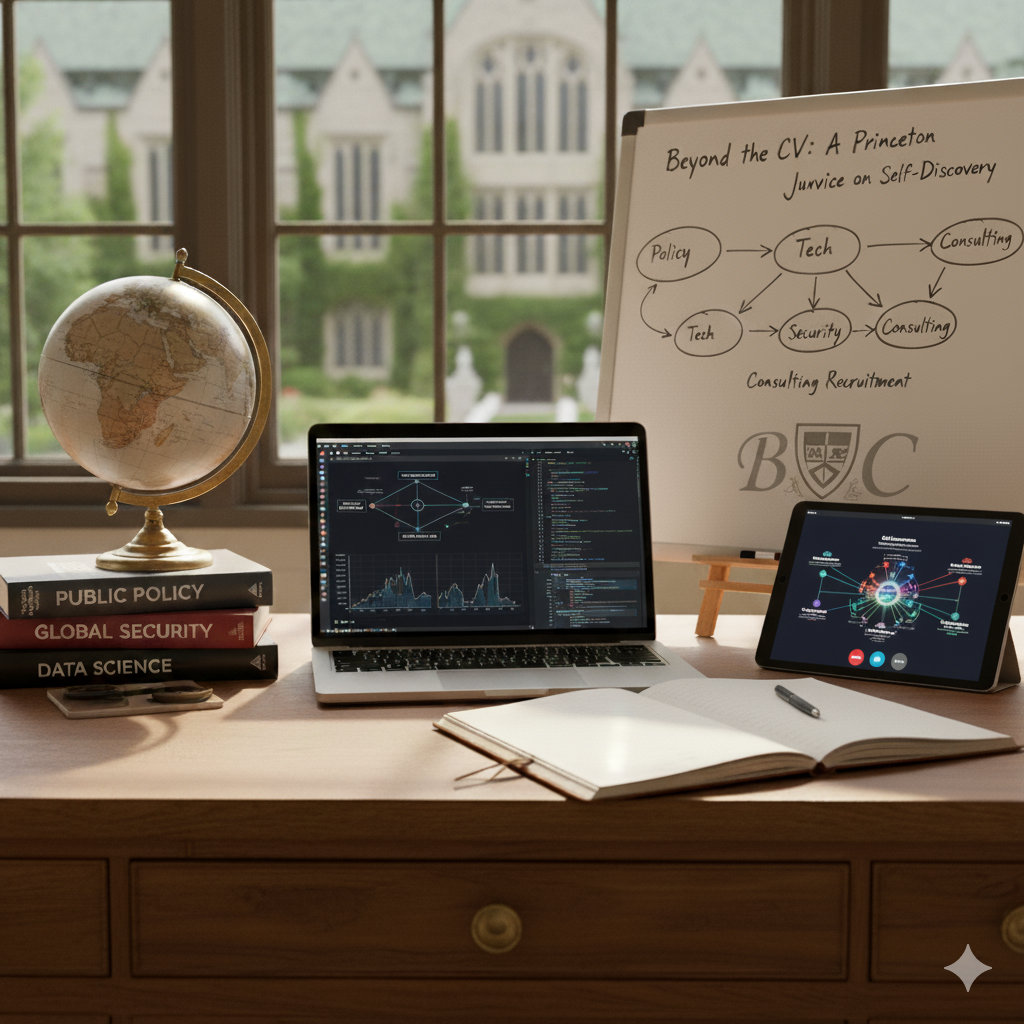
Beyond the CV: Princeton Junior's Advice on Self-Discovery and Intentional Consulting Recruitment
She feels the best interviews feel natural and conversational rather than overly rehearsed. During virtual interviews, she advises candidates to communicate their process clearly since it can be harder to visually show work through a screen. Clarity and comfort, she says, go a long way in leaving a strong impression with your interviewer. Once an interview was over, she would remind herself, “I did my best, and I can’t change anything now.” The waiting game between interview rounds was the most difficult part for Dhyana. She had to learn to accept uncertainty as part of the process.
Read More
AI Won’t Kill Journalism — But It Might Starve It
That promise of speed and scale is seductive. But at what cost? Washington Post editor Marc Fisher, speaking on another occasion, offered a quiet rebuke to such over-optimization. His vision of journalism is intensely human — rooted in messiness, empathy, and trust. Fisher recalled knocking on a widow's door to inform her of her husband's death, and how, instead of slamming the door, she invited him in for hours. “People are desperate to be heard,” he said. “Even in the worst moments of their lives, they want to tell their story.” So, AI can write prose and draft reports; what it cannot do is sit with grief.
Read More
Beyond the Hedge Fund: Prospero.ai's CEO Unveils a People-First Vision for AI Finance
He sees AI not as a replacement for human intuition but as a tool to enhance decision-making and create financial opportunities that were previously inaccessible to everyday investors. “The future of AI is about empowering people,” he said. By focusing on transparency, fostering innovation within his team, and designing products that genuinely address consumer needs, Kailas is positioning Prospero.ai as a leader in ethical and transformative financial solutions.
Read More
Cindy Fields: Finding Community and Courage on the Road from Wall Street to 'Fairy Godmother'
Equally important is staying true to yourself. “Don’t be afraid of being different,” she says. She recalled how she embodied this ethos when she balanced her demanding career as a Wall Street banker with her passion for ballroom dancing. “I was a straight-laced banker by day and a ballroom dancer by night.”
Read More
Forging Paths for Engineer-Entrepreneurs: An Interview with DataForge’s CEO Mattew Kosovec
At DataForge, Kosovec’s leadership philosophy is deeply rooted in future growth and a shared vision. He describes himself as a "hyper open CEO," emphasizing the importance of accessibility within the organization: "Every single person in any organization, no matter how big, should have access to every other person." He believes in demystifying leadership by reminding everyone that "everyone is just people," including successful executives who "trip and fall down the stairs" and "have their own problems."
Read More