
A Talk with Courtney Harrison: Uniquely Human
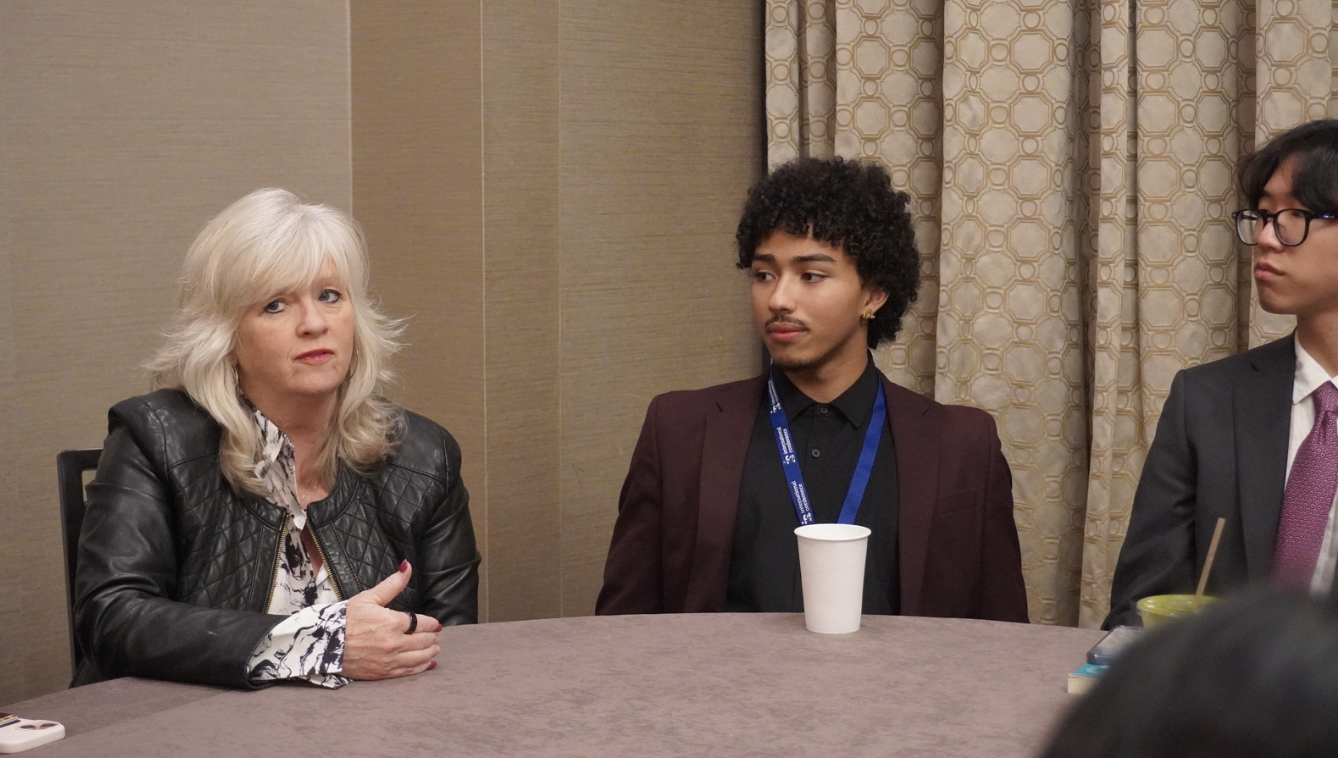
Courtney Harrison, founder of Medius Advisory Group, leading an executive workshop.
Courtney Harrison, founder of Medius Advisory Group, has led hundreds of successful organizations, including Fortune 500 companies like Nike, Microsoft, and American Express, as well as startups such as Tesla and Asurion. Among her 25 years of consulting, her most memorable role was Chief of Human Resources & Event Services at the United States Olympic Committee in 2008.
Her fondness for the Olympic Committee role comes from her love of sports (“I’m all about human performance”) and the inspiration she drew from working with athletes. Harrison spent weeks with the U.S. Olympic and Paralympic teams as CHRO, and found the resilience of Paralympic athletes especially memorable.
Building on these experiences, the inspiration of Olympic and Paralympic athletes and their growth potential continue to drive Harrison’s passion for her work. One of her greatest passions is helping “people become really successful, whatever they’re trying to do,” rooted in her love for growth and her goal to “get better and better at human performance.”
Expanding on her philosophy, “human performance,” as Harrison mentioned once more, captures the journey people take to succeed, grow, and thrive. While people increasingly rely on technology and artificial intelligence to aid their journeys, Harrison notes the importance of continuing to recognize our human aspects as some of the most powerful assistants, particularly for leaders.
Empathy, which Harrison calls a “uniquely human quality,” sets the best leaders apart. A.I. can’t replicate leaders who “really care about their people.” When someone feels down, Harrison believes they want a genuinely empathetic person, not a “humannoid pretending to be empathetic.”
She added, “Simulating empathy is different from being empathetic,” referring to the increasing reliance on A.I. “A.I. might get so good, it’s hard to tell, but we have to remember, it is a robot,” she said. It does not have a human brain. [...] It will never have intuition that is distinctly human.”
Leading, Harrison says, is an “emotional game,” not an “intellectual game.” When asked what causes company struggles, she points to leadership and highlights that leaders who listen and treat people well reduce turnover, again stressing the importance of empathy.
Harrison names inspiration as another “distinctly human” quality. Asked what makes a good leader, she highlights their ability to inspire and motivate others, noting, “A.I. is never going to be an inspiring leader.”
The biggest inspirations in Harrison’s life have also been the best leaders, and one of these includes David Russo, a former senior HR executive at SAS Institute. His leadership at the SAS Institute, where he introduced a no-manual policy and emphasized treating employees like “adults, not children,” spurred the SAS Institute’s placement in the top ten of Fortune Magazine’s “100 Best Companies to Work for in the US.”
While A.I. doesn’t have a place as a leader, Harrison is still excited about the opportunities for transformation it can bring, and the challenges it can bring to Harrison’s career. Looking ahead, as Harrison continues to move forward, she is also hopeful for more opportunities to work with women and people of color, who make up a majority of her clients, and to form a legacy among the thousands of lives she has helped.