
Neil Buethe’s Story: Life in Sports Management
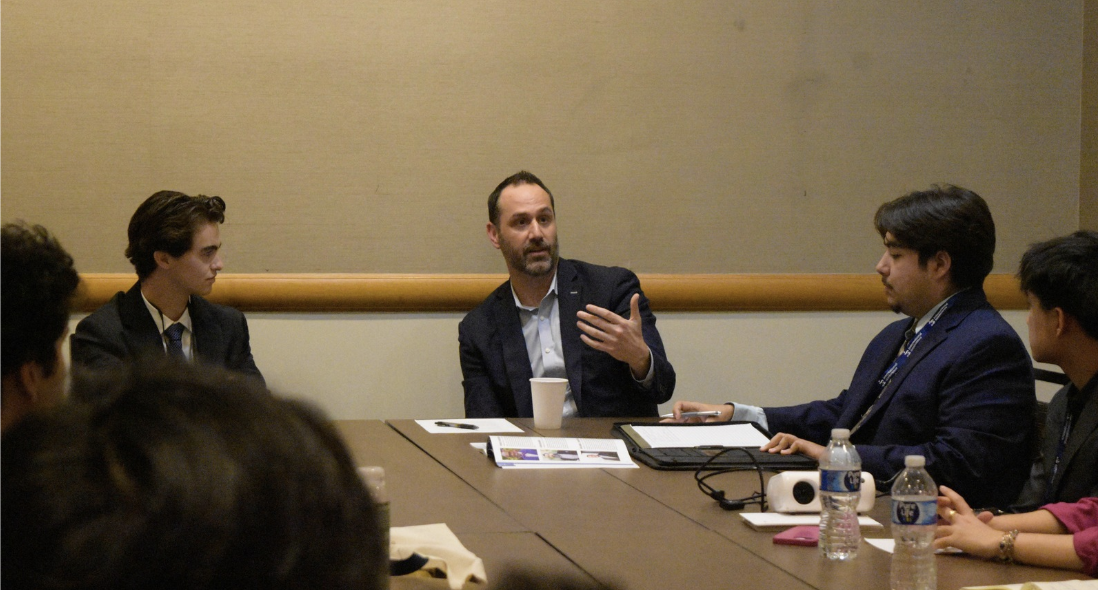
Neil Buethe at the 51st IC.
In 2026, the United States will host the largest sporting event ever staged. Neil Buethe is one of the people making sure it goes off without a hitch. As Advisor to the CEO of the U.S. Soccer Federation–the nonprofit governing body that oversees American soccer at every level, from youth leagues to the national teams–Buethe has spent over two decades at the center of the sport’s growth. He came to Business Today’s 51st International Conference to share what that journey has looked like, and what he wishes he’d known at the start of it.
Buethe’s path into sports management didn’t begin with a grand plan. It started with an internship, although he’s quick to tell students that volunteering can be an even better entry point. From a first job as a General Assignment Sports Reporter at a small Wisconsin paper in 2002, he built his career one role at a time: Youth National Team Press Officer, Communications Content Manager, Video Host, Senior Manager of Communications, and eventually Chief Communications Officer at the Federation. He also spent time as Communications Lead on the United Bid 2006 campaign in the United Kingdom. Each position added a new layer. Twenty-two years later, he advises the CEO.
Now, the biggest challenge of his career is approaching. The 2026 FIFA World Cup, co-hosted by the U.S., Canada, and Mexico, will be unlike anything the sport has seen. “This will be the largest sporting event that’s ever been put on,” Buethe said. For him, it’s not just a logistical undertaking; it’s an opportunity. “The World Cup will be unbelievable.”
The Federation’s goal, Buethe explained, goes beyond filling stadiums. Through inclusive outreach and fan development campaigns, the organization hopes to bring new audiences, including both kids and adults alike, into the sport in a lasting way. The World Cup, he believes, could permanently shift soccer’s place in American culture.
When the conversation in the seminar room turned from the World Cup to career advice, Buethe didn’t hesitate. Students wanted to know how someone gets from a college campus to a role like his. His answer was less about strategy and more about mindset.
“Just to learn as much as you can and to take it all in. You're not going to have all the answers, you’re going to get things wrong here and there, you’re going to make mistakes, but it’s all part of the process. Do your best to learn from all these situations. You can learn from your bad boss.”
It’s advice by which Buethe clearly lived. He didn’t arrive at the top of American soccer overnight: he absorbed it, role by role, mistake by mistake, over more than two decades. With the World Cup months away and a sport on the verge of a cultural moment, he seems exactly where that kind of patience leads.